

The page you were trying to view is not available for your role.
Start rewrapping client wealth today
From April 2027, pension death benefits are included within the scope of inheritance tax. Our Pensions and IHT adviser roadshow survey suggests this is likely to create a significant advice need for many of your clients - and firms that act now will be best placed to support good client outcomes.
Roadshow survey: the scale of the advice need
Source: Quilter adviser survey, 939 advisers, Q2 2026
Advisers told us the pension IHT changes are likely to affect a meaningful proportion of their clients and may require firms to review planning processes, client communications and capacity.
54%
of advisers are concerned about pension being subject to IHT & income tax (on over 75s)
Nearly 6/10
advisers said they do not yet feel fully ready or are just starting on the journey
80%
believe increased complexity will drive greater demand for professional advice
Why advisers need to act early
In this video, Roddy Munro, explains the biggest concern raised by advisers was the risk of clients failing to act in time.
Delaying conversations with your clients could make it harder to plan effectively, engage families, and implement changes before April 2027.
Starting now can help you prioritise affected clients and manage demand.
Client risk
Clients and families may face poor outcomes if they delay important planning decisions.
Firm pressure
Managing your workload, dealing with complexity, and engaging with clients could all become more challenging as April 2027 approaches.
Planning opportunity
Acting early gives you more time to review clients’ plans and have rewarding conversations.
Start with these planning conversations
These are practical areas firms may want to consider as they prepare for the pension IHT changes:
- Review beneficiary nominations
Check nominations remain suitable and reflect current client circumstances. - Consider consolidating
Explore whether consolidating pensions could help to avoid complexity, stress, and poor outcomes for clients. - Prepare your advice process
Ensure you understand the changes and your business is prepared ahead of April 2027. - Segment affected clients
Identify clients who may need a pension, estate planning, or legacy planning review. - Discuss estate planning
Speak to your clients about trusts, legacy planning, and transferring wealth where appropriate.
Support to help you prepare
Explore the latest support and guidance to help get your firm ready.



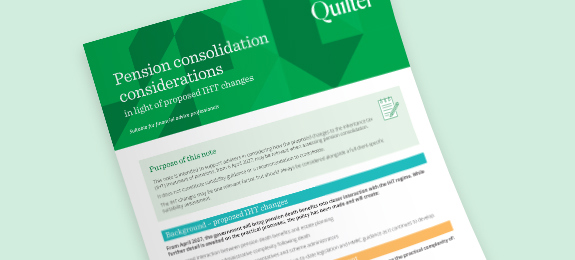

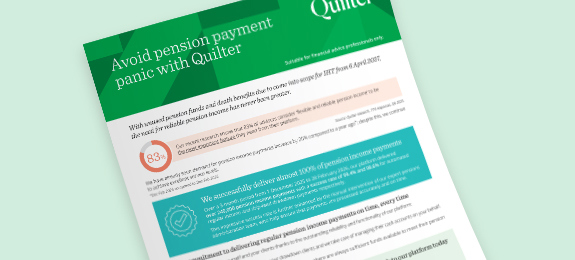
Embracing a new approach to wealth management
- Case studies
- Rewrapping – your advice tools
- Onshore bonds
- IHT & trusts
- Moving money between wrappers
Case studies
Discover how rewrapping can be effectively utilised across different scenarios by exploring our range of case studies.
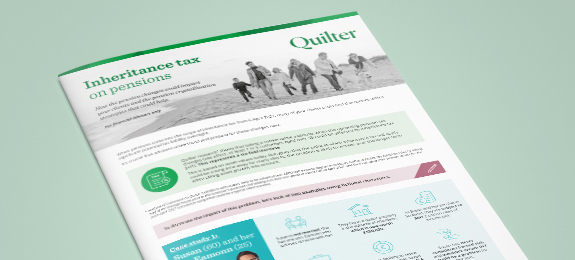
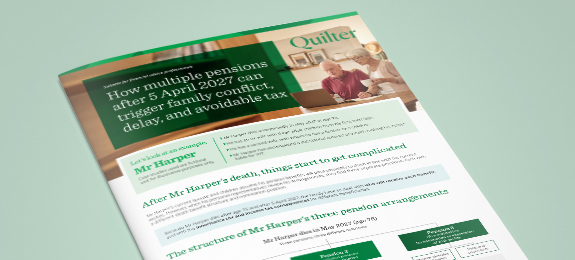
Rewrapping – your advice tools
This is a great opportunity to demonstrate the value of your advice and ensure all your clients’ investments are optimised for tax.
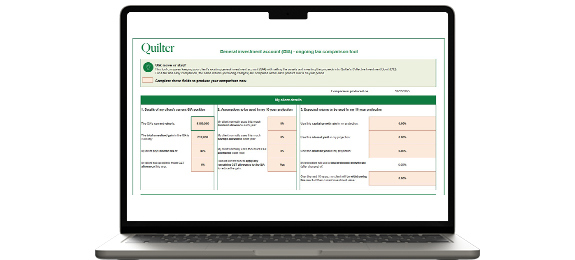
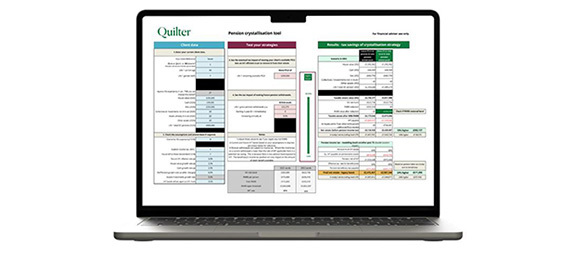
Our new adviser tools are designed to make this process quicker and easier for you.
Onshore bonds
More advisers are now turning to onshore bonds due to their significant tax advantages compared to general investment accounts.
QTalk: The Collective Investment Bond
Our popular QTalk video explains why so many advisers are considering bonds, and the support on offer from Quilter.

FAQs
Our 'ongoing tax comparison tool' helps you identify clients who may save tax from looking at the different tax-efficient investments available. The tool lets you quickly review each client's GIA holdings and see whether they could lower their income or capital gains tax bill in an onshore bond. As you’re aware, tax is one consideration within your client’s wider circumstances and can therefore act as a catalyst for those conversations. Additional consideration is needed if larger withdrawals are being taken from the investment on a regular basis.
One of the key benefits of a bond is that it is considered a ‘non-income producing asset’. Income and gains are assessed on the UK insurer rather than the bond holder. There is only a tax event for your client when there is a chargeable event and potentially an income tax liability, for example when a policy is surrendered, withdrawals above the 5% withdrawal allowance or the last life assured dies.
Onshore bonds are subject to a charge for the UK corporation tax on interest and capitals gains the insurer has paid. To reflect this, the bond holder is given a 20% income tax credit on any chargeable event gain – reducing the personal income tax due on encashment.
With a GIA, where income is generated every year, any amounts in excess of personal tax allowances will create an income tax liability. In addition, a CGT disposal occurs every time you sell some or all of the investment – such as withdrawals, fund switches, and rebalances. With the reduction in annual CGT and dividend allowance thresholds, this means more people will be paying tax on these types of investment for the first time.
For those clients paying tax above 20% on investment income or gains, a bond might help to improve the net returns you achieve for them.
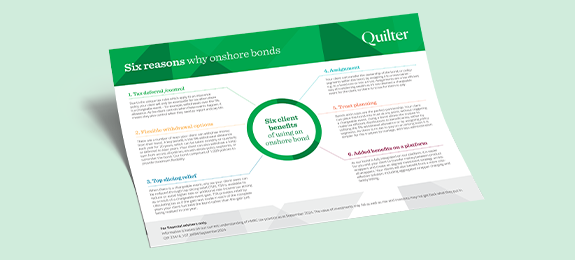
We've created this comprehensive guide to help you understand the benefits of using onshore bonds effectively in your planning.
IHT & trusts
More clients will be impacted by IHT in the future. Trusts will play a crucial role in helping your clients mitigate their IHT exposure.
QTalk: Solving inheritance tax
Discover this useful webinar, as our specialist presents an essential guide to gifting and trusts.
FAQs
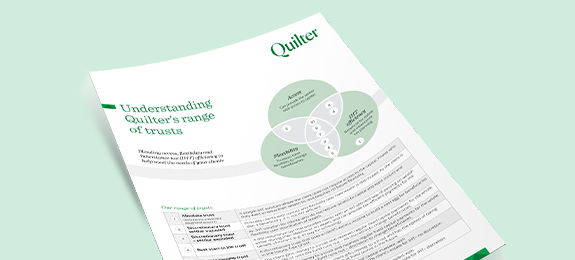
Please visit the trust planning section of our website for further help and support in recommending trusts. Material available on this site will help you understand how trusts work, the range of trusts available, and how to create a trust with Quilter.
Quilter’s most popular trust is the Lifestyle Trust. This flexible solution enables clients to gift money into trust with the option of taking capital payments in the future. Clients can either take or defer the payments when the time comes. This flexibility helps to reassure clients who may be worried about making irrevocable decisions about their own future financial needs.
For more information on the Lifestyle Trust please visit our Lifestyle Trust section.
Gifts out of normal expenditure is a useful exemption which can avoid having to wait for seven years for a gift to fall outside your client’s estate for IHT purposes.
3 conditions must be met for gifts to qualify:
- It forms part of the individuals (settlor's) normal expenditure
- It was made out of their income
- It doesn't cause a reduction in their standard of living
If all these conditions are met, then there is no limit on the amount which can be gifted and immediately exempt from IHT.
HMRC will usually consider a payment (in this case, a gift) to be regular or habitual if it has been made across three or four years, with the intention of continuing to make further, similar payments. However, even if the individual should die after only one such gift, it's possible to establish that it meets this requirement, if it can be shown that it was your client's intention to make the gift regularly on a habitual basis. Documentary evidence of intention is therefore important.
Moving money between wrappers
Strategies for utilising the pension commencement lump sum (PCLS) will become even more important alongside flexible pension income options.

FAQs
Each case will have its own unique set of circumstances. What advisers need to weigh up is whether other tax-wrappers can provide a more effective home for the capital, and whether other strategic measures, such as rebalancing pension wealth between spouses, funding pensions for children/grandchildren, or trust planning can help.
For an example of how the PCLS can be used effectively to help rebalance pension wealth between spouses please see our Tom case study.
As announced at the Autumn Budget, the decision to include pension wealth within IHT from 6 April 2027 has been made. However, the detail on how they intend to implement this remains outstanding.
Ready to take the next step?
The countdown to April 2027 has started. Use the support, tools, and expert guidance to review your client bank, prepare your firm, and start the conversations that could make a difference.
Get in touch with your Quilter consultant
Our consultants are here to help you maximise this opportunity and find the best solutions for your clients. Contact us today to learn more about how you can easily optimise tax-efficiency for your clients and demonstrate your expertise in your ongoing advice.
Approver: Quilter September 2026
QIP 23456/206/18263