The page you were trying to view is not available for your role.

Summary
Recent central-bank decisions illustrate a shift toward a structurally higher-rate environment, shaped by resilient economic activity, public spending, artificial intelligence investment, and political pressures. The latest blog from Sacha Chorley examines how this shift could alter capital flows, asset valuations, and portfolio construction.
I read the news today, about a car company who no longer made the grade
We Portfolio Managers do tend to read slightly obscure press releases. This morning I read that German auto stalwart Volkswagen was being demoted from the Euro Stoxx 50 index, losing its spot to brick-phone manufacturer Nokia. VW’s popular car, the Beetle, hit its peak production probably around the time the UK music export the Beatles hit their peak popularity, and in many ways both were symbols of a move to a more connected and richer world.
Back then, it was also a rate hiking environment as we are now in. But think about the today world in which we are shifting away from internationalisation, I found the divergence between central bank policy choices quite interesting. Viewed individually, the latest central bank decisions appear straightforward.
The Federal Reserve raised by 25 base points (bps). The Bank of Japan continued its slow march away from the emergency settings that defined much of the last three decades, also with a 25bps hike. And the Bank of England chose to hold steady, at least for now.
Come Together
But across the three central banks there were common elements which stood out. Sure, inflation has proven stubbornly resilient but even with a big shock in oil prices, this is not the inflation scare of 2022. Most developed economies are no longer grappling with double-digit consumer price increases.
The surprise has been the economy itself, which has been able to ‘Get By With a Little Help From Its Friends’ (the government and the AI-investment boom). Deficit-financed government spending has remained significant, whilst global AI investment continues to drive extraordinary levels of capital expenditure. Companies, governments and investors have all been spending far more aggressively than many forecasters anticipated, and this has (certainly in the case of the US), forced these rate hikes to happen.
Taxman
Politics has also returned to centre stage. In the United States, many commentators assumed the Federal Reserve might become more politically accommodating. But new Fed Chair Kevin Warsh bucked expectations that he might just kowtow to Trump’s wishes and voted in favour of a 25bp hike.
Meanwhile in Japan, politics has surfaced in a different way. Two Ministry of Finance-appointed members reportedly opposed the latest rate increase, highlighting the delicate balancing act facing Governor Kazuo Ueda. The Bank of England's decision to hold rates was arguably the least dramatic of the three decisions, but perhaps the most politically sensitive. With an October Budget approaching, the interaction between monetary and fiscal policy will be closely scrutinised and expectations are for a visit from the Taxman.
Here comes the sun
Stepping back, it’s worth asking the bigger question: what does a structurally higher-rate world mean for investors?
For much of the post-financial-crisis period, virtually every asset class benefited from falling discount rates and abundant liquidity. After having dealt with the shock of high commodity prices and Covid reopening through 2021/22, it does appear that tailwind may be fading into ‘Yesterday’. This matters because household ownership of equities sits close to historical highs in many markets. At the same time, cash and government bonds offer yields that investors have not seen for years.
The Long and Winding Road
Indeed, for years, Japanese investors refused near zero returns at home and invested abroad instead. US Treasuries, global bonds and international equities benefited enormously from this flow of capital. Even today, Japan remains one of the largest foreign holders of US government debt – but frankly, there is no need to ‘Let It Be’. Why bother taking foreign bond risk if you can achieve the same yield with neither cost of hedging nor foreign currency risk. The $1tn Japanese Government Pension Investment Fund opening door to increasing their portfolio’s share of domestic assets, investors are rightly musing what happens if flows shift in this manner.
The higher rate environment matters for the investment boom surrounding artificial intelligence too. Clearly, AI has helped sustain growth, support employment and the massive cash flows and earnings have propelled equity markets higher. As the financing needs have increased, concern around corporate bond financing crowding out government spending has also increased. We know AI is going to be transformational to many businesses: but not all business will justify expectations built during an era when capital was extraordinarily cheap.
The higher rate environment will mean new trade offs and considerations are necessary for investors when building portfolios. It is working out, in a world where money once again has a cost, which investments will still be ‘Here, There and Everywhere’.
Key takeaways
- Higher rates are here to stay: Central banks are taking different approaches, but resilient growth and persistent inflation mean interest rates are likely to remain higher for longer.
- Politics and policy are driving markets: Government spending, AI investment and political pressures are playing an increasingly important role in shaping central bank decisions and economic outcomes.
- Investors face new trade-offs: With cash and government bonds offering attractive yields again, investors must reassess which assets can continue to deliver strong returns in a world where capital is no longer cheap.

Sacha Chorley
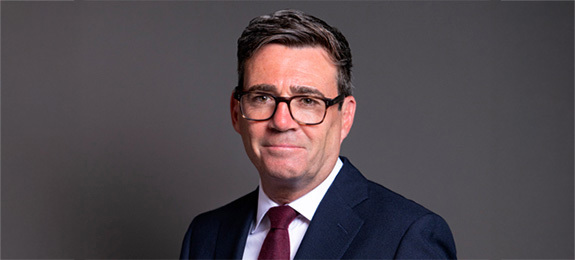
Portfolio ManagerSacha is a portfolio manager of the Quilter Investors Cirilium and Creation Portfolios. Prior to joining Quilter Investors in 2011, Sacha worked at Broadstone with their team of economists before moving into asset allocation and fund manager research.
Sacha is a CFA charterholder and has also completed the Chartered Alternative Investment Analyst qualification. Sacha has a degree in Maths from the University of Bath.