
Search

Chaos is not a ladder

Date: 06 March 2026

4 minute read

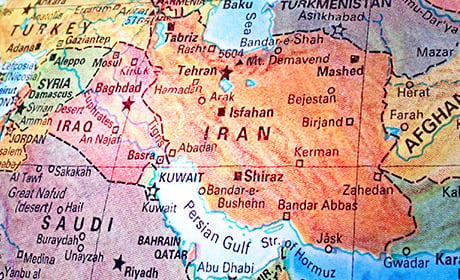
Map of middle east

Summary

The recent Iranian attack surprised most equity investors and caused notable market volatility, highlighting the challenges of predicting geopolitical shocks and their market impacts. Investors are advised to focus on portfolio robustness and long-term goals rather than reacting impulsively to short-term events.

Well, that was quite an eventful week. By the time you read this, you may well have seen some of the analysis that has been published discussing all the various scenarios that could now play out in Iran and how this will feed into markets. Rather than rehash those notes, I wanted to examine this episode more in the manner of a playbook of how we should try and behave as investors when something of this nature occurs.


You know nothing, dear investor

The first thing to say is probably that the Iranian attack was a big surprise. Actually, that’s probably an overstatement. There definitely appeared to be some people making bets on Polymarket and Kalshi who seemed to think something was about to happen. But for equity market investors, this was a bolt from the blue (just ask Korean investors, where the KOSPI index was down nearly 20pct in the first two trading sessions following the strikes).

Interestingly, crude oil markets were pricing some heightened (upside) risk to prices ahead of the strikes on Iran, suggesting that participants in those markets were increasing the probabilities of something kicking off and hedging themselves as a result.

Geopolitical shocks are difficult to navigate. Very, very, very few people actually know about these kinds of things (although many people talk as if they do know).  And even if you manage to guess the shock event correctly, you then face the equally tricky problem of deciding how markets will reprice the economic and practical impacts.

The complexity of market drivers has real influence here. Consider that even something as ‘simple’ as safe-haven gold prices have fallen since the weekend, while speculative Bitcoin has rallied. Is this simply investors selling their (strongly returning) defensive asset to rotate into things that have now sold off?


Hold the door

OK so if it’s hard to trade events, how should we be dealing with scenarios like this? Essentially, this whole episode is a demonstration of need to proactively prepare the portfolio to be robust to different scenarios. As investment people often say, diversification is really the only free lunch, and we need to get stuck in to try and introduce this robustness. Cash, fixed income, defensive equity sectors and the myriad of alternative strategies can all add defensiveness to portfolios in their own distinct ways, and should all be considered.

And what should we be doing in the moment? Probably not much! Volatility in crisis events rises substantially, and so any shift you make in the portfolio will have a bigger impact on returns and should require you to have higher conviction to enter a trade. This works the other way too: higher volatility does also mean any positions you leave alone will have higher impacts on returns. So, it is appropriate to making sure positions are rightsized to account for the increased riskiness.

If you are still struggling to just sit on your hands, then the different perspectives offered by the crude and equity markets suggest a way forward. Through careful and detailed analysis of underlying markets, it may be possible to identify divergent pricing across markets to take a position that offers asymmetric returns. This is tricky to do but is often a great way to use these big market moves to get high bang-for-buck trades into a portfolio.


This is not the long Night

However, it is important to maintain perspective. A Goldman Sachs study found that over the past 40 years, in the 21 instances where the US conducted military strikes in the Middle East, equity markets were up over the next 2 months in 95% of cases. The moves we have seen so far have been muted in most markets (except for energy markets). Major equity markets have fallen approx. 3-4% in local currency terms with the US basically remaining flat, and EM the worst having lost around 8%. Small mercies in that, as GBP investors, Sterling weakness (mainly versus the $) has helped to mitigate some of those losses. At any rate, given the range of moves we’ve seen it seems unlikely that (m)any clients’ financial expected outcomes will have meaningfully shifted.  

The reality is that although there has been a lot of fire and noise, there is still too much uncertainty to really know yet how this will feed into economies, companies and markets. Now is the time to remain on the lookout for opportunities, and to ensure we are integrating actual data as we receive it. But we must always remember to remain mindful of our clients’ long-term goals and to resist change if we remain on the right track.


Key takeaways

  • Geopolitics is a high-noise, low-signal world. It’s hard to know what is going to happen, never mind what the market reaction will be.
  • It’s better to have a plan ahead of time: diversify portfolio return drivers and err on the side of inaction in the heat of the moment.
  • Focus on the long term. There is nothing to do if long term financial plans are still able to be achieved

Sacha Chorley

Portfolio Manager

Sacha is a portfolio manager of the Quilter Investors Cirilium and Creation Portfolios. Prior to joining Quilter Investors in 2011, Sacha worked at Broadstone with their team of economists before moving into asset allocation and fund manager research.

Sacha is a CFA charterholder and has also completed the Chartered Alternative Investment Analyst qualification. Sacha has a degree in Maths from the University of Bath.